Chennai · Dr. Charan J.C.
Gynecomastia Surgery in Chennai
A flatter, more masculine chest — planned around your anatomy
Puffy nipples, excess gland and stubborn chest fat can look similar — but they don't always require the same treatment. Start by understanding what is actually causing your chest enlargement.
- Correct puffy nipple prominence
- Reduce excess gland and resistant chest fat
- Create a natural masculine chest contour
Take the 60-second chest assessment
Private · Confidential · Personalised · No obligation
Does this sound like you?
Does This Sound Like Your Inner Voice?
Many men silently live with these thoughts every day without talking about them.

I never remove my shirt at the beach.
Months in the gym, no change.
I always wear loose T-shirts.
I cross my arms instinctively.
My nipples show through my shirt.
Lost weight, chest still there.
I avoid changing around others.
If several of these thoughts feel familiar, you’re not alone. Many men experience the same concerns. The next step is understanding what is actually causing your chest enlargement.
Understanding it
What exactly is gynecomastia?
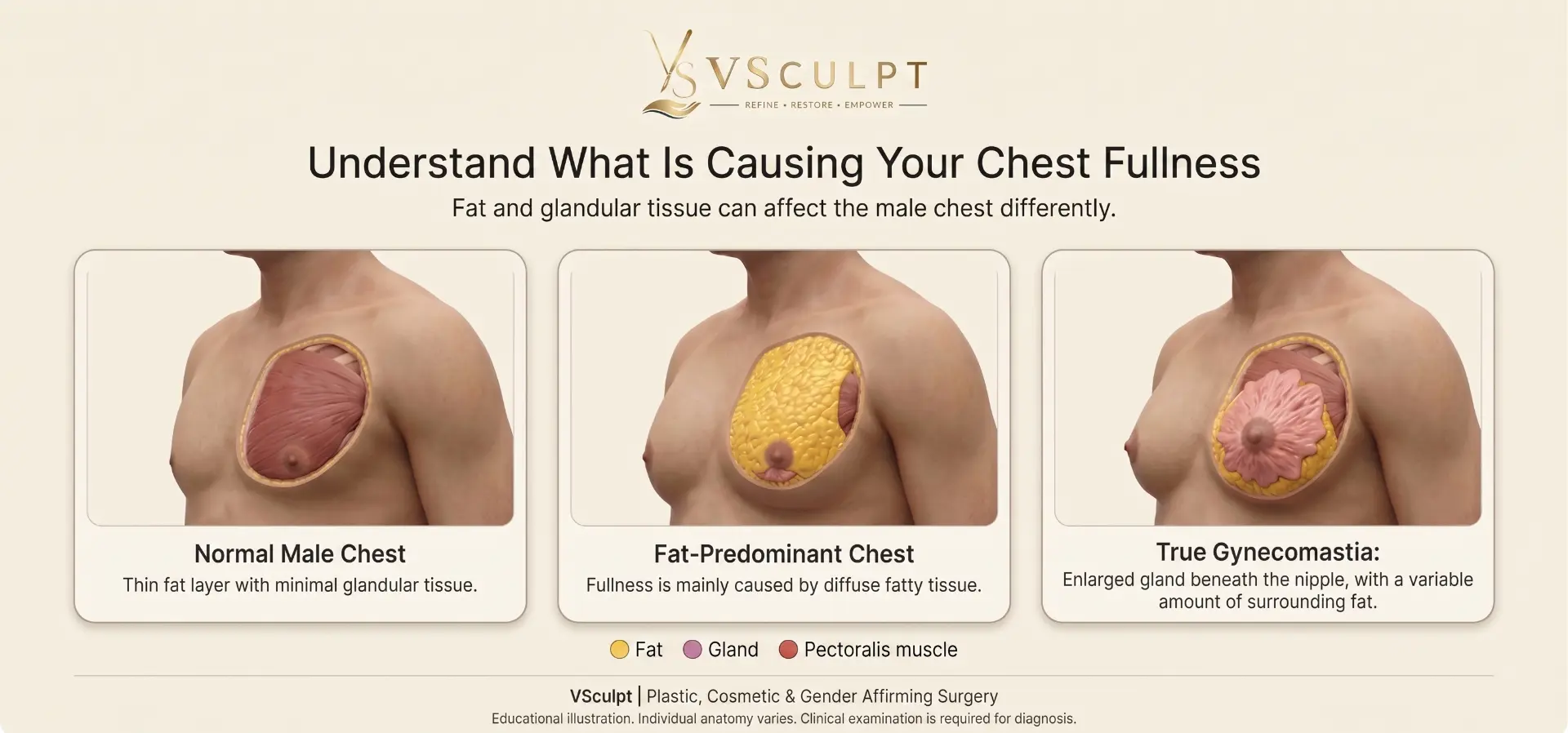
Male chest enlargement can come from glandular breast tissue, from fat, or from a combination of both. The two can look similar from the outside, yet they typically behave differently — fat often responds to overall fat loss, while glandular tissue usually does not.
This is why the tissue composition, along with skin quality and nipple position, matters before treatment is planned. A clinical assessment is required to establish what is actually present.
Start here
Do I have gynecomastia?
Dr. Charan explains the common signs and how gynecomastia differs from ordinary chest fat.
Still unsure? Answer a few questions about your chest.
Take the 60-second assessmentOr book a free video consultationInteractive Assessment
Could your chest enlargement be gynecomastia?
This short assessment cannot diagnose your condition, but it can help you understand what may be contributing to your chest appearance. It takes less than 60 seconds.
How old are you?

Your Surgery. Your Surgeon.
Gynecomastia Surgery Planned and Performed by Dr. Charan J.C.
MBBS · MS (General Surgery) · MCh (Plastic Surgery) · Fellowship in Aesthetic Surgery
Plastic & Cosmetic Surgeon | 18+ Years Surgical Experience | 1,100+ Surgeries
“The goal isn’t simply to remove gland or fat. It is to create a chest that looks naturally masculine, balanced and proportionate to your body.”
What Dr. Charan Assesses
Your surgical plan is based on all six — not just the size of the gland.
18+
Years Surgical Experience
13+
Years Plastic Surgery Experience
0+
Surgeries Performed
Direct Surgeon Assessment
Your chest is personally assessed and treatment planned by Dr. Charan.
Contour-First Approach
Treatment considers gland, fat, skin and chest proportions rather than simply removing tissue.
Experience Across Chest Surgery
Extensive experience in aesthetic, breast and gender-affirming chest procedures.
Structured Follow-Up
Recovery, compression, scar care and return to activity follow a planned postoperative pathway.
“Good gynecomastia surgery is not about removing the maximum amount of tissue. It is about removing the right tissue while preserving a natural chest contour.”
Private consultation · No obligation · Direct surgeon assessment
Before & after
Real results from real patients.
 Before
 After
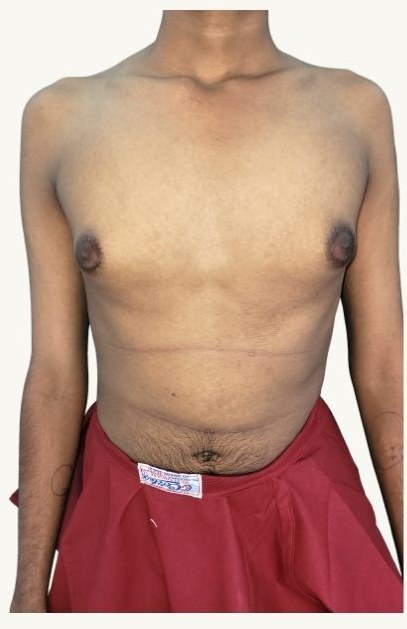
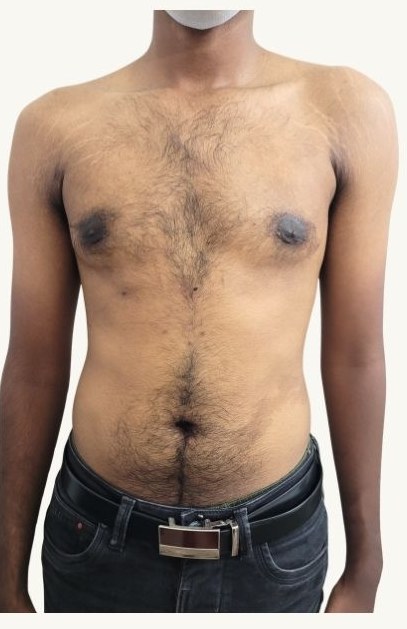
AfterPuffy nipple gynecomastia
1 month follow-up
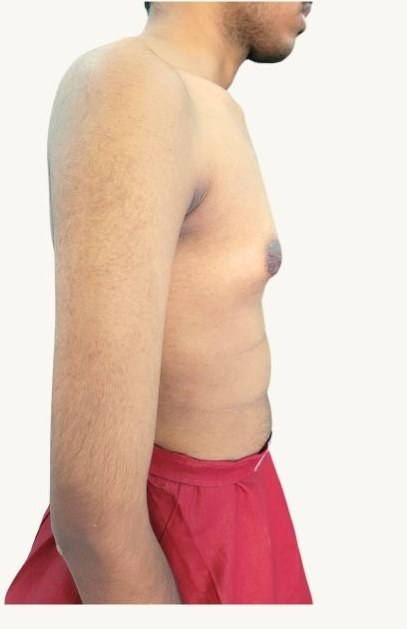 Before
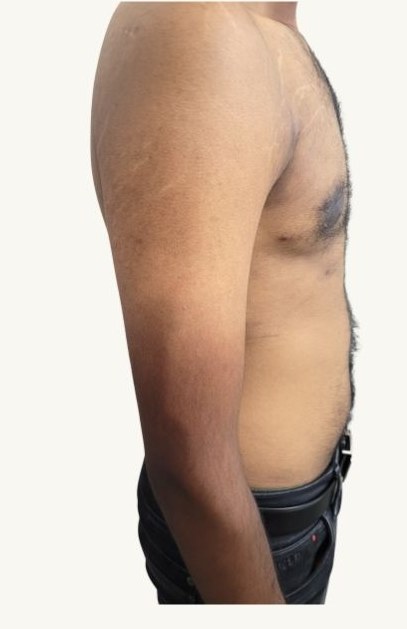 After
AfterGrade I gynecomastia
6 month follow-up
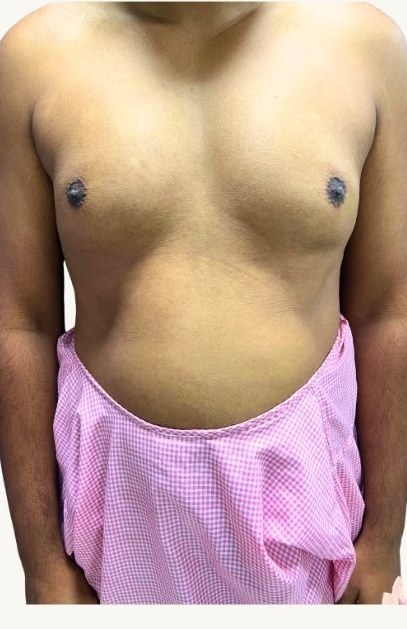 Before
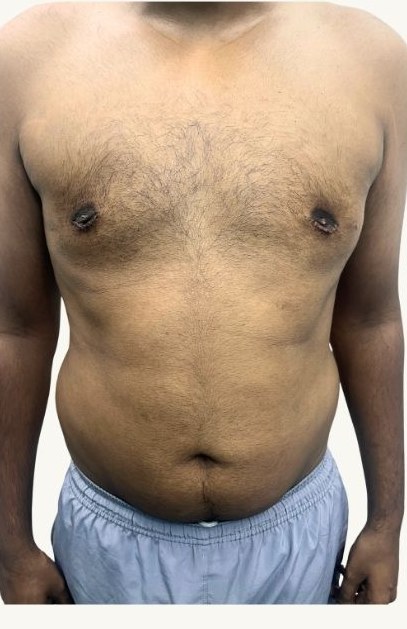 After
AfterGrade IIA gynecomastia
3 month follow-up
Fat or Gland?
Understanding what is causing your chest enlargement
Move the slider to see how the chest changes between fatty fullness and true glandular tissue.
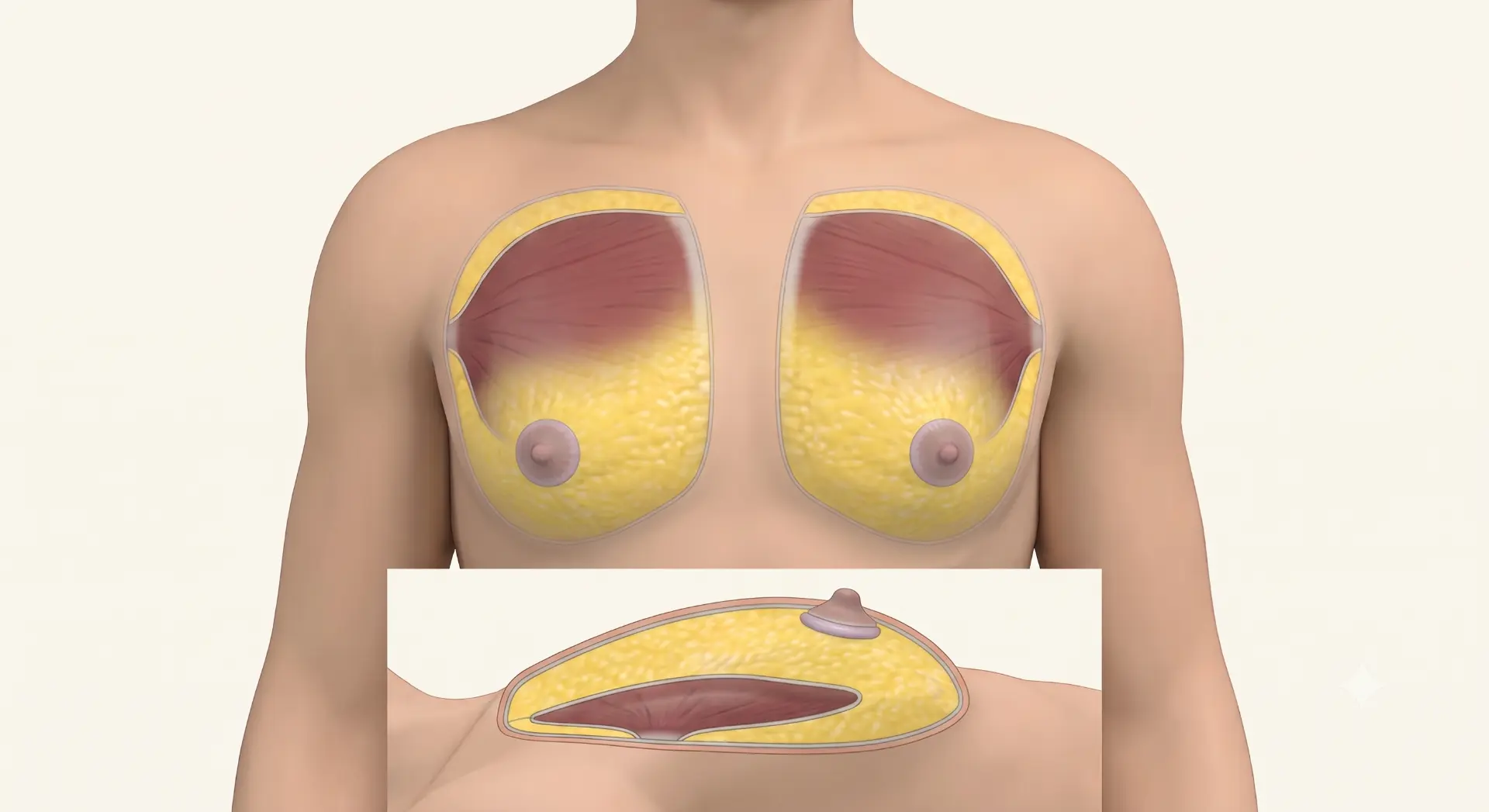
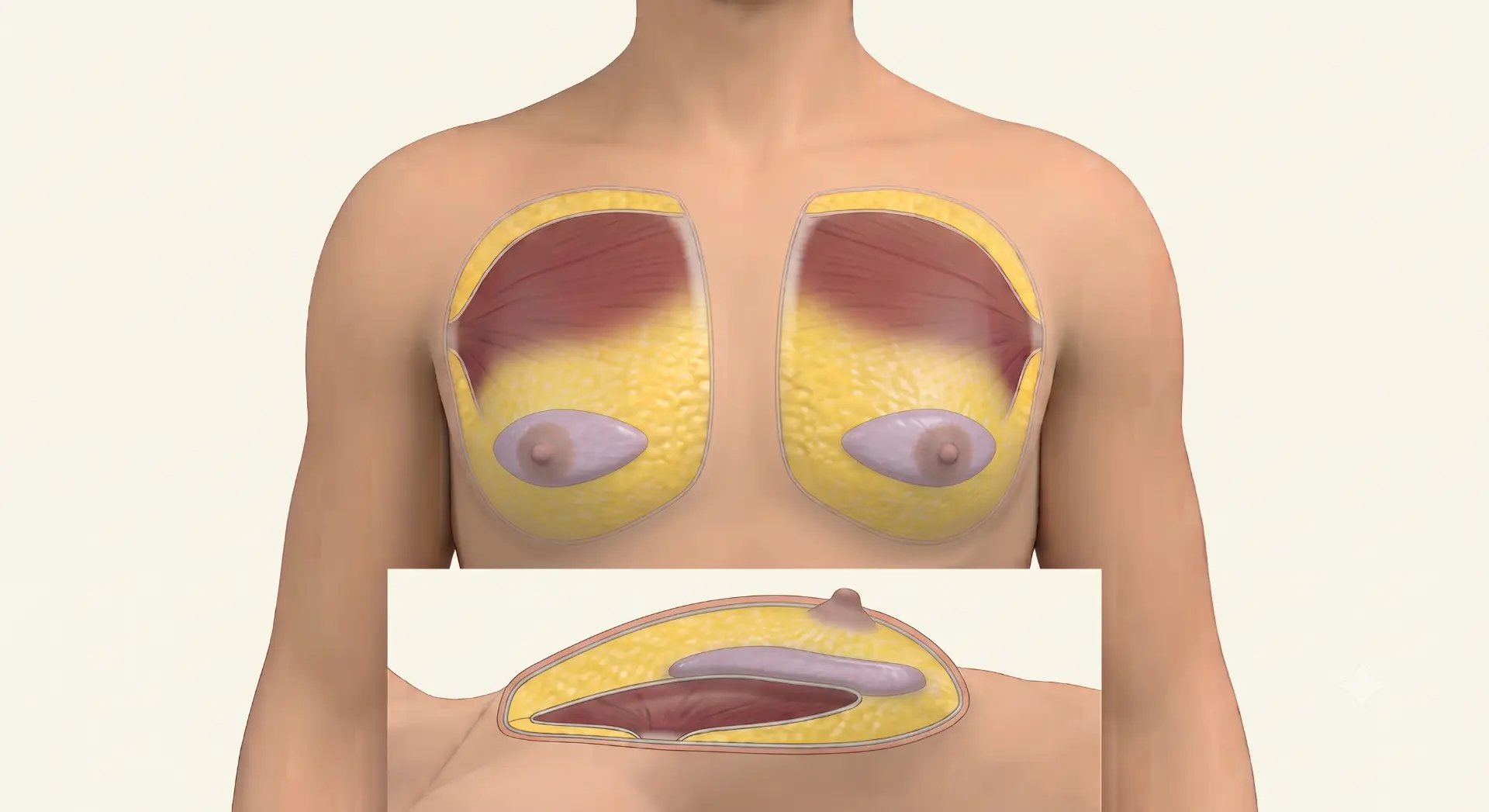
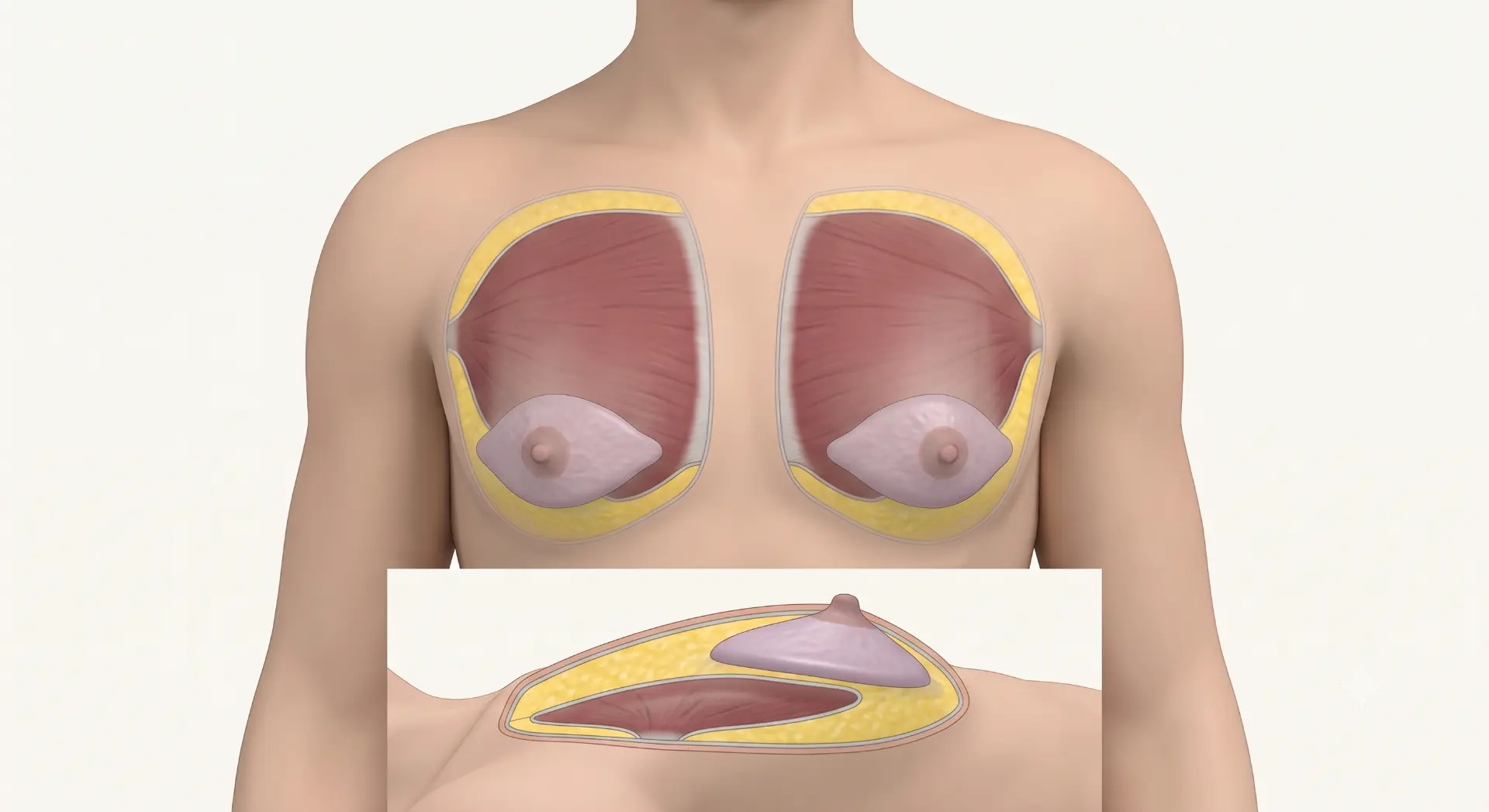
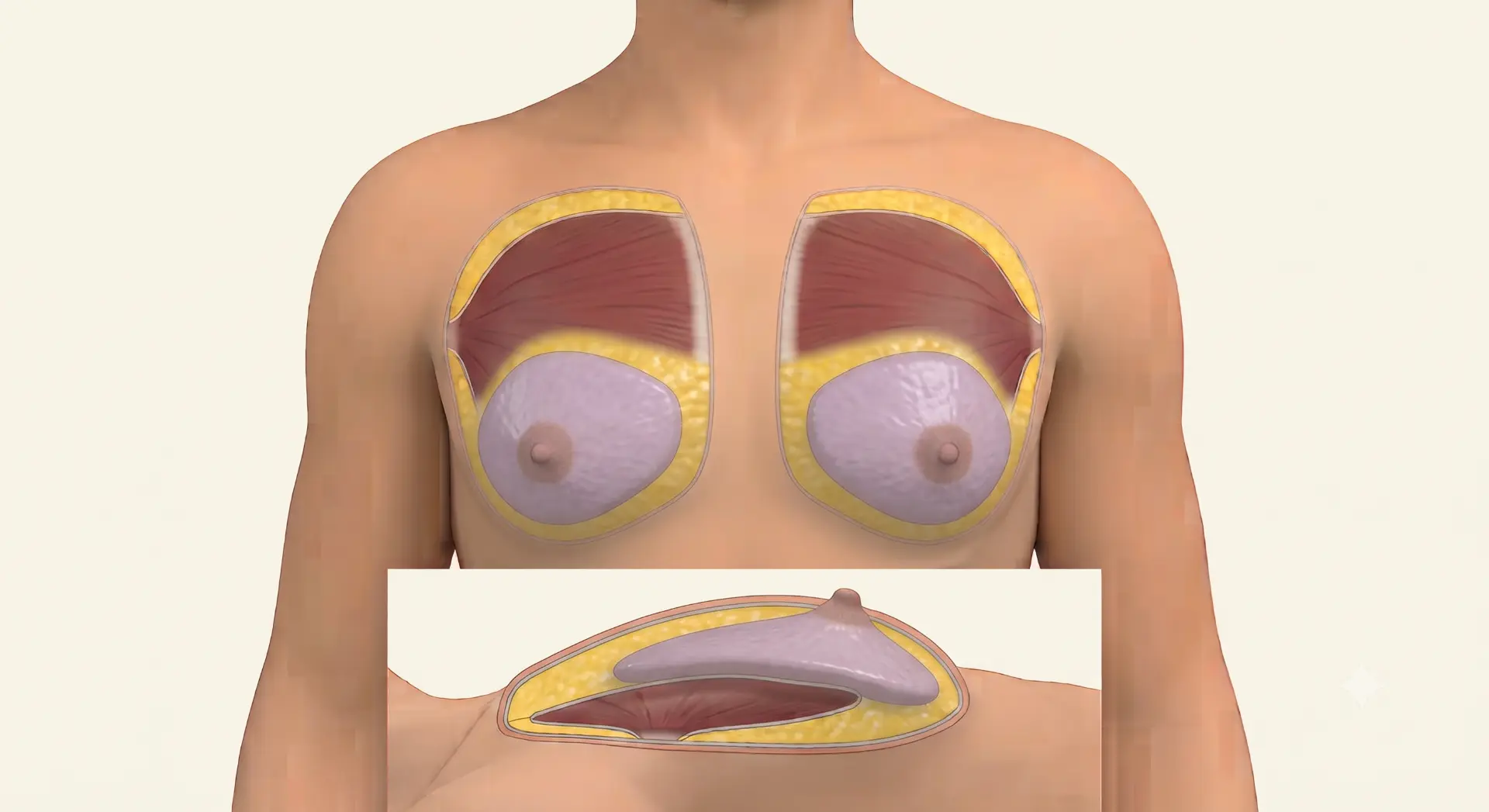 Illustrative cross-section
Combination
The most common pattern — gland plus surrounding fat.
- Firm disc under the nipple with soft fullness around it
- Chest looks rounder from the side
- Partly responds to weight loss, never fully
Typical treatment
Liposuction combined with gland excision for a flatter, natural contour.
During your consultation, we assess:
Why it happens
Why does gynecomastia happen?
Several factors may contribute. Extensive hormonal testing is not required for everyone — what is needed depends on your history and examination.
Hormonal changes
A shift in the balance between oestrogen and testosterone activity.
Puberty
Common during adolescence; it often settles on its own over months.
Certain medications
Some prescribed medicines are associated with breast tissue changes.
Steroid or testosterone use
Anabolic steroid or testosterone exposure may contribute in some men.
Weight-related fat
Increased body fat can add chest fullness, sometimes alongside gland.
Medical causes
Occasionally an underlying condition is relevant and needs review.
No clear cause
In many men no single cause is identified, and that is not unusual.
Gynecomastia grades
Not every gynecomastia chest is the same
Grades differ in gland, fat, skin excess and nipple position. Educational only.
Video 03 — Grades of gynecomastia, explained
| Grade | Looks like | Skin | Approach | Recovery |
|---|---|---|---|---|
| Grade IMild | Small swelling under the nipple only | No excess skin | Gland excision through a small areolar incision | Desk work 2–3 days · gym 3–4 weeks |
| Grade IIAModerate | Fullness spread across the whole chest | Skin still tight | Liposuction + gland removal | Desk work 3–4 days · gym 4–6 weeks |
| Grade IIBModerate + mild skin | Slight sag, lower chest fold visible | Mild skin excess | Liposuction + gland removal, limited skin tightening | Desk work ~1 week · gym ~6 weeks |
| Grade IIISignificant | Breast-like contour, nipple sits lower | Definite skin excess | Gland removal, liposuction and skin reduction | Desk work 5–7 days · gym 6–8 weeks |
| Grade IVSevere | Pronounced sagging of the lower chest | Heavy skin excess, poor elasticity | Extended reduction with nipple repositioning | Desk work ~1 week · gym ~8 weeks |
Educational only. Grade cannot be determined from photographs alone — a physical examination is essential.
The most common question
“I've been training my chest. Why isn't it going away?”
Fat can reduce
Fatty fullness often decreases as overall body fat comes down with diet and training.
Gland usually stays
Glandular tissue generally does not disappear through chest exercise or weight loss alone.
Muscle changes shape, not tissue
Building the pectoralis can improve chest shape, but it does not remove glandular tissue.
Deciding
Is surgery right for me?
These are general considerations, not a score. Only a clinical assessment can determine whether treatment is appropriate for you.
You may be ready to consider surgery
- Persistent enlargement that has not changed over time
- A stable weight
- Completed or near-completed puberty
- Puffy nipples or persistent glandular fullness
- Chest remains enlarged despite appropriate exercise and weight management
- Significant personal concern about chest appearance
- Reasonable, realistic expectations
- Medically fit for surgery
Sometimes waiting is better
- Recent pubertal gynecomastia that may still settle
- Significant weight loss still planned
- Recent onset that first needs medical assessment
- Uncontrolled medical conditions
- Ongoing contributing drug or steroid exposure
- An unclear diagnosis
Why VSculpt™
The VSculpt Standard
- V
Vision-First Treatment Planning
We start by understanding your goals, anatomy and expectations.
- S
Safety First Care
Suitability, patient safety and responsible decision-making guide every step.
- C
Customised Treatment
Tailored to your anatomy, tissue characteristics and individual goals — never one-size-fits-all.
- U
Understanding Through Education
We explain the available options, expected recovery, limitations and risks clearly so you can make an informed decision.
- L
Long-Term Follow-Up
Care continues after surgery through structured follow-ups and recovery guidance.
- P
Precision in Planning
Careful assessment and attention to detail aim to support balanced and natural-looking outcomes.
- T
Transparency and Trust
Suitability, realistic expectations, recovery and approximate pricing are discussed openly without pressure.
The VSculpt Standard describes our approach to care. Individual results, recovery and suitability vary.
Patient experiences
What our patients say
Shared anonymously with consent. Individual experiences and results vary.
“I hid my chest for almost eight years. What surprised me most was how normal the consultation felt — no judgement, no awkwardness, just a clear explanation of what was going on. Three months on, I wear fitted shirts without thinking about it.”
“I'd tried the gym, the diets, everything. Dr. Charan was the first person who explained why the firm tissue under my nipple was never going to shift. The surgery itself was far easier than I'd built it up to be in my head.”
“The team were completely discreet from the first message to the last follow-up. Recovery was straightforward — back at my desk in a week, and the swelling settled far quicker than I expected.”
“What I appreciated was the honesty. I was told exactly what was realistic for my grade and skin quality, with no overselling. The result looks natural — nobody can tell I've had anything done, they just notice I stand differently.”
“I hid my chest for almost eight years. What surprised me most was how normal the consultation felt — no judgement, no awkwardness, just a clear explanation of what was going on. Three months on, I wear fitted shirts without thinking about it.”
“I'd tried the gym, the diets, everything. Dr. Charan was the first person who explained why the firm tissue under my nipple was never going to shift. The surgery itself was far easier than I'd built it up to be in my head.”
“The team were completely discreet from the first message to the last follow-up. Recovery was straightforward — back at my desk in a week, and the swelling settled far quicker than I expected.”
“What I appreciated was the honesty. I was told exactly what was realistic for my grade and skin quality, with no overselling. The result looks natural — nobody can tell I've had anything done, they just notice I stand differently.”
Your Journey at VSculpt™
A clear, structured process — consultation to recovery
- 01
Free Video Consultation
Discuss your concerns privately from home.
- 02
Clinical Assessment
Examination, gland and skin evaluation.
- 03
Personalised Plan
A plan built for your anatomy.
- 04
Surgery
Accredited hospital, planned for safety.
- 05
Recovery & Follow-up
Garment, wound care and reviews.
- 06
New Confidence
A flatter, more defined chest.
The procedure
How is gynecomastia surgery performed?
The plan varies from person to person — not every patient receives the same combination of steps.
- 1Assessment
- 2Marking
- 3Liposuction where required
- 4Gland excision where required
- 5Contour refinement
- 6Drain if required
- 7Compression garment
Liposuction
Targets excess fatty tissue and helps contour the chest.
Gland excision
Removes firm glandular tissue responsible for persistent fullness or puffy nipples.
Combination treatment
Many patients require both techniques for balanced chest contouring.
Real patient results
Real patients. Individual results.
Every chest starts differently. Compare results from patients with different presentations of gynecomastia.
Case 01
Puffy nipple gynecomastia
- Technique
- Liposuction + gland excision
- Follow-up
- 1 month
Photos shared with informed patient consent. Individual results vary. Photographs represent individual outcomes and are not a guarantee of results; surgery carries risks that are reviewed during your consultation.
Aftercare
What happens after surgery?
Dressings
Light dressings are applied and reviewed at your early follow-up.
Compression garment
Worn as advised to support the chest and help settle swelling.
Drain management
If a drain is used, care and removal are explained before discharge.
Wound review
Wounds are checked to confirm healing is progressing as expected.
Follow-up
Planned reviews with Dr. Charan track your recovery over the months.
Scar care
Scar care is typically started once wounds have healed.
Activity progression
Movement is increased gradually, guided by your surgeon's clearance.
General guidance only — your protocol depends on your procedure and individual recovery.
Recovery timeline
When can I get back to normal life?
General guidance only — timings vary with your procedure, your recovery and your surgeon's clearance.
- Day 3
Bandages off, compression garment applied. Light activity, driving and desk work can resume.
- Day 7
Drains removed. You can start showering.
- Week 2
Suture removal, reduced pain, longer walks.
- Weeks 4–6
Compression garment off after clearance. Gym and heavy activity resume.
- Months 3–6
Final shape settles and scars fade.
Common questions about getting back to normal
- Work
- Desk work is often possible within about a week.
- Driving
- Usually once off sedating medication and moving comfortably.
- Gym
- Light activity early; full training typically after clearance.
- Chest workouts
- Generally the last to resume, often around 6–8 weeks.
- Sleeping position
- Sleeping on your back is usually advised early on.
- Compression garment
- Typically worn for around 4–6 weeks.
- Travel
- Discussed individually, based on your follow-up plan.
Why the compression garment matters
It reduces swelling, supports healing tissue and helps the skin settle to your new contour.
Healing takes time
Your chest changes gradually — not overnight
Early swelling can temporarily obscure the final contour, and results continue evolving during healing. Individual results vary.
- 1
Immediately after surgery
The chest is supported in a garment; swelling and firmness are expected.
- 2
Early swelling
Swelling and bruising are usually at their most noticeable.
- 3
1 month
Much of the early swelling typically begins to settle.
- 4
3 months
The contour usually looks considerably more defined.
- 5
6 months
Tissues continue to soften and results keep refining.
Honest answers
Will I have a scar?
- All surgery produces scars — the aim is to place them discreetly.
- The incision pattern varies with the technique used and the severity of the enlargement.
- Scars typically mature and soften over many months.
- More extensive skin reduction procedures require additional scars.
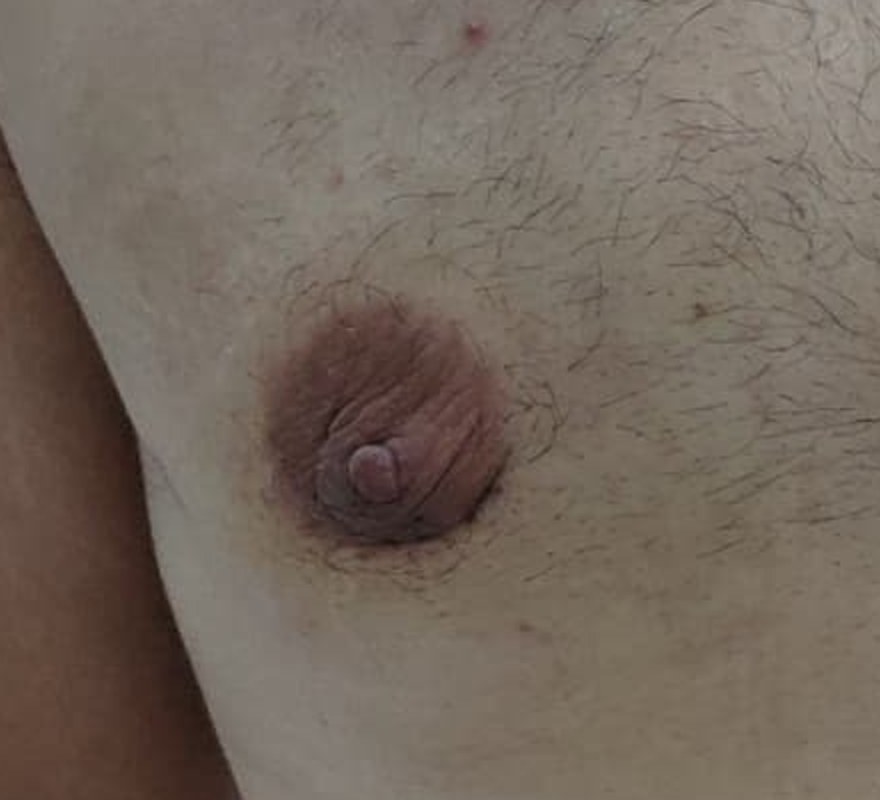
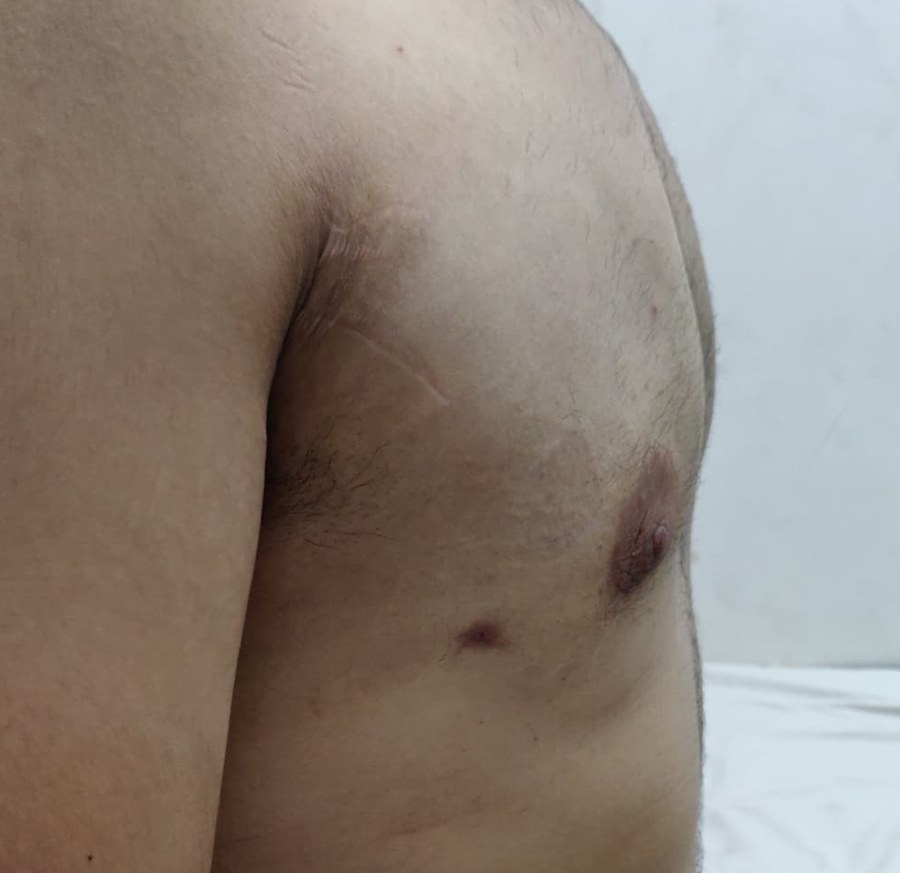
Actual patient photographs shared with consent. Where appropriate, incisions are commonly placed along the areolar margin. Your own plan is discussed at consultation.
Common concerns
The questions men usually ask next
Will gynecomastia come back after surgery?
In most appropriately treated cases, recurrence is not expected. However, future hormonal changes, certain medications, anabolic steroid exposure or significant weight change may affect the chest over time.
How painful is gynecomastia surgery?
Most men describe soreness, tightness, swelling and tenderness rather than severe pain, particularly in the first few days. Pain management is provided after surgery and discomfort typically eases as healing progresses.
Can gynecomastia turn into cancer?
Gynecomastia itself is a benign condition. That said, not every male breast lump should automatically be assumed to be gynecomastia, which is why an examination matters.
Get checked promptly if you notice
- A hard or irregular lump on one side
- Bloody nipple discharge
- Nipple retraction
- Skin changes over the chest
- Rapid, unexplained enlargement
- Concerning lymph node enlargement
These features are not a reason to panic — they are a reason to be examined.
Honest information
Risks, at a glance
Every surgical procedure carries risk. Each of these is discussed openly in your consultation.
Early healing
Contour & symmetry
General
See a doctor promptly if you notice
Not every enlarged male chest is gynecomastia — a medical assessment is important.
Transparency
What does gynecomastia surgery cost?
Packages starting from ₹60,000
Your final package depends on the grade of gynecomastia, the surgical technique, anaesthesia, hospital requirements and your individual treatment plan.
Request my personalised estimateVideo library
Learn with Dr. Charan
FAQs
Your questions, answered
Ready to take the first step?
You don't need to keep guessing what's causing your chest enlargement
A private consultation can help determine whether your chest appearance is primarily related to gland, fat, skin excess or a combination — and whether treatment is appropriate for you.
Private · Confidential · Personalised · No obligation